




Know-how
Acupressure and trigger point map
Tap an area of the body to see the best-known acupressure points and typical trigger point spots, with how to find them, how to press, for how long and what to watch out for. The acupressure notes describe what a point is used for in traditional teaching, not a proven effect.
Body map
Choose an area
Acupressure comes from traditional Chinese medicine. Meridians and qi are a traditional explanatory model, not something found in anatomy. Point locations follow the 2008 WHO standard; the notes under “In traditional teaching” describe what a point is used for in that tradition. They are not a statement about any effect.
A trigger point is a firm, tender spot in a muscle that you can feel, and its pain is often felt somewhere else. Where they sit varies from person to person; the map shows typical spots. Researchers disagree on how reliably trigger points can be found by touch (Lucas et al. 2009).
All points
LI4 Hegu (Large Intestine 4)
How to find it
On the back of the hand between thumb and index finger, beside the middle of the second hand bone (metacarpal) on the thumb side. To find it, press your thumb against your index finger: the point sits at the highest spot of the muscle bulge.
How long
1 to 2 minutes per hand
In traditional teaching
In traditional teaching, the most widely used point of all; it is linked to the head and face and used for headaches, toothache and a tight neck.
Take care
Traditionally avoided during pregnancy. Do not press on broken or inflamed skin.
LI11 Quchi (Large Intestine 11)
How to find it
On the outer side of the elbow. Bend your arm fully: the point is at the outer end of the elbow crease, halfway towards the bony bump on the outside of the elbow (lateral epicondyle).
How long
1 minute per arm
In traditional teaching
In traditional teaching, the point is used for elbow and forearm complaints and for a feeling of heat.
Take care
Do not press on an irritated, swollen or freshly injured elbow. Tingling in the fingers means ease off.
PC6 Neiguan (Pericardium 6, also P6)
How to find it
On the inner forearm, three of your own finger-widths above the wrist crease, in the middle between the two tendons. To find it, turn your palm up and lay the index, middle and ring fingers of your other hand across your forearm, ring finger on the crease. The point is at the edge of your index finger. Making a fist and bending the wrist slightly brings the tendons out.
How long
2 to 3 minutes per arm, repeat after an hour if needed
In traditional teaching
In traditional teaching, the point is used for nausea, travel sickness and restlessness.
Take care
A nerve runs under this point: tingling in the fingers means you are pressing too hard or beside the groove. An acupressure band must not dig in. Ongoing vomiting needs medical attention.
HT7 Shenmen (Heart 7)
How to find it
On the wrist crease on the little-finger side, in the small hollow right next to the tendon that runs to the pea-shaped bone at the base of the palm (pisiform) when you bend your wrist, on the thumb side of that tendon.
How long
1 to 2 minutes per hand
In traditional teaching
In traditional teaching, the point is used for restlessness, nervousness and trouble falling asleep.
Take care
An artery and a nerve run beside the point. Press gently only; ease off if your ring or little finger tingles.
SI3 Houxi (Small Intestine 3)
How to find it
On the outer edge of the hand below the little finger. Make a loose fist: the point is at the end of the palm crease, in the hollow just behind the knuckle of the little finger, where the back of the hand meets the palm.
How long
1 minute per hand
In traditional teaching
In traditional teaching, the point is used for a stiff neck and tension in the shoulders and upper back.
Take care
Press into the hollow behind the knuckle, not on the joint itself.
TE5 Waiguan (Triple Energizer 5, also SJ5)
How to find it
On the back of the forearm, three of your own finger-widths above the wrist crease on the back of the hand, in the middle between the two forearm bones (radius and ulna). It sits opposite PC6 on the inner side.
How long
1 minute per arm
In traditional teaching
In traditional teaching, the point is used for headaches at the side of the head and tension in the neck, shoulder and wrist.
Take care
Do not press on the edges of the bones or on a freshly injured wrist.
GB20 Fengchi (Gallbladder 20)
How to find it
At the back of the head, just under the base of the skull, in the hollow between the two muscles that run from the skull down the neck (sternocleidomastoid and trapezius). Roughly level with your earlobes, either side of the centre.
How long
1 to 2 minutes
In traditional teaching
In traditional teaching, the point is used for tension headaches, a stiff neck and tired eyes.
Take care
Only press upwards against the skull, never forwards or sideways into the neck. Not after a neck injury. Stop if you feel dizzy or sick.
GB21 Jianjing (Gallbladder 21)
How to find it
On top of the shoulder, halfway between the prominent bone where the neck meets the back (7th neck vertebra) and the outer tip of the shoulder (acromion), at the highest point of the muscle ridge.
How long
1 minute per side
In traditional teaching
In traditional teaching, the point is used for tension in the shoulders and neck.
Take care
Traditionally avoided during pregnancy. Use moderate pressure and press downwards only.
GV20 Baihui (Governing Vessel 20, also DU20)
How to find it
On the crown of the head, on the midline. To find it, imagine a line over the top of your head joining the tips of your ears; the point is where it crosses the midline, usually in a small dip.
How long
1 minute
In traditional teaching
In traditional teaching, the point is used for calming down and a “clear head”.
Take care
Gentle pressure only. Not after a head injury.
Yintang (GV29, formerly EX-HN3)
How to find it
On the forehead, exactly midway between the inner ends of the eyebrows, in the small dip above the bridge of the nose.
How long
1 to 2 minutes
In traditional teaching
In traditional teaching, the point is used for frontal headaches, tension and trouble falling asleep.
Take care
Light pressure is enough. Do not press on the eyes.
Taiyang (EX-HN5, temple)
How to find it
At the temple, in the hollow about one finger-width behind the midpoint between the outer end of the eyebrow and the outer corner of the eye.
How long
30 to 60 seconds
In traditional teaching
In traditional teaching, the point is used for headaches at the temples and tired eyes.
Take care
The temporal artery runs under the skin here. Gentle pressure only.
BL2 Zanzhu (Bladder 2)
How to find it
At the inner end of the eyebrow, in the small notch on the bony rim above the inner corner of the eye.
How long
30 to 60 seconds
In traditional teaching
In traditional teaching, the point is used for frontal headaches and strained, tired eyes.
Take care
Press against the bone only, never on the eyeball.
LI20 Yingxiang (Large Intestine 20)
How to find it
Beside the nostril, in the groove between nose and corner of the mouth, level with the middle of the outer edge of the nostril.
How long
30 to 60 seconds
In traditional teaching
In traditional teaching, the point is used for a blocked nose.
Take care
Gentle pressure only; avoid inflamed skin or spots.
ST6 Jiache (Stomach 6)
How to find it
On the cheek, one finger-width in front of and above the angle of the jaw. To find it, clench your teeth: the point is at the highest part of the chewing muscle as it bulges.
How long
1 minute
In traditional teaching
In traditional teaching, the point is used for a stiff jaw, teeth grinding and toothache.
Take care
Press gently if your jaw joint is sore. Ongoing tooth or jaw pain should be checked by a dentist.
CV17 Danzhong (Conception Vessel 17, also REN17)
How to find it
On the breastbone, on the midline, level with the fourth space between the ribs. In men this is usually on the line between the nipples.
How long
1 minute
In traditional teaching
In traditional teaching, the point is used for calm, deep breathing and emotional tension.
Take care
Gentle pressure only; not after injury or surgery to the chest. Sudden chest pain or breathlessness is an emergency: call 112 straight away.
ST36 Zusanli (Stomach 36)
How to find it
On the lower leg, four of your own finger-widths below the kneecap (measured from the hollow at its lower outer edge) and one finger-width out from the sharp front edge of the shinbone, in the muscle.
How long
1 to 2 minutes per leg
In traditional teaching
In traditional teaching, a classic “energy point”; it is used for digestive complaints, tiredness and heavy legs.
Take care
Do not press over varicose veins or on irritated skin.
GB34 Yanglingquan (Gallbladder 34)
How to find it
On the outer side of the lower leg, in the hollow in front of and below the head of the fibula (the round bony bump below the knee on the outside).
How long
1 minute per leg
In traditional teaching
In traditional teaching, the point is linked to muscles and tendons and used for tightness in the legs and knees.
Take care
A nerve wraps around the head of the fibula. Ease off straight away if your lower leg or foot tingles.
SP6 Sanyinjiao (Spleen 6)
How to find it
On the inner side of the lower leg, four of your own finger-widths above the highest point of the inner ankle bone, just behind the inner edge of the shinbone.
How long
1 to 2 minutes per leg
In traditional teaching
In traditional teaching, the point is used for period pain, digestive complaints and trouble falling asleep.
Take care
Traditionally avoided during pregnancy. Varicose veins are common on the inner lower leg: do not press there, and not if you have or might have a blood clot.
LR3 Taichong (Liver 3, also LV3)
How to find it
On the top of the foot, in the groove between the first and second foot bones (metatarsals). Slide a finger up from the gap between the big toe and second toe until it stops in the hollow just before the two bones meet, about two finger-widths from the web.
How long
1 to 2 minutes per foot
In traditional teaching
In traditional teaching, the point is used for tension, headaches and irritability.
Take care
You can often feel the foot pulse here: press gently. With diabetes and reduced feeling in the feet, only after checking with your GP, and never on broken skin.
KI1 Yongquan (Kidney 1, also KD1)
How to find it
On the sole of the foot, in the deepest hollow that forms when you curl your toes. It lies roughly a third of the way along a line from the gap between the second and third toes to the heel.
How long
1 to 2 minutes per foot
In traditional teaching
In traditional teaching, the point is used for restlessness, trouble falling asleep and cold feet.
Take care
Avoid cracked skin, blisters, verrucas or corns. With diabetes and reduced feeling, only after checking with your GP.
KI3 Taixi (Kidney 3)
How to find it
On the inner side of the ankle, in the hollow between the highest point of the inner ankle bone and the Achilles tendon.
How long
1 minute per foot
In traditional teaching
In traditional teaching, the point is used for lower back pain, tiredness and cold feet.
Take care
Do not press over varicose veins or on an irritated or injured Achilles tendon.
BL40 Weizhong (Bladder 40)
How to find it
At the back of the knee, exactly in the middle of the crease.
How long
30 to 60 seconds per leg
In traditional teaching
In traditional teaching, a distant point for the back; it is used for lower back pain and tension in the knee.
Take care
An artery, a vein and a nerve lie just under the skin here: light pressure only. Not with swelling behind the knee, varicose veins or a swollen, warm calf, which needs to be checked by a doctor.
BL60 Kunlun (Bladder 60)
How to find it
On the outer side of the ankle, in the hollow between the highest point of the outer ankle bone and the Achilles tendon.
How long
1 minute per foot
In traditional teaching
In traditional teaching, the point is used for back and neck tension and for heel and ankle complaints.
Take care
Traditionally avoided during pregnancy. Do not press on an irritated Achilles tendon.
BL23 Shenshu (Bladder 23)
How to find it
In the lower back, two finger-widths out from the spine, level with the second lumbar vertebra. To find the level: a line across the tops of your hip bones (iliac crests) meets the spine at the fourth lumbar vertebra; count two bony bumps up from there.
How long
1 to 2 minutes
In traditional teaching
In traditional teaching, the point is used for lower back pain, tiredness and a cold feeling in the lower back.
Take care
Do not press on the spine itself and do not drum on the area. Pain in the side with a fever or pain when passing urine should be checked by your GP.
Upper trapezius
How to find it
In the muscle ridge between the neck and the tip of the shoulder. Pinch the upper edge of the muscle between thumb and fingers; the most tender spot is usually in the middle of the free edge, a little closer to the neck than GB21.
How long
Hold for 30 to 90 seconds, then stretch for 20 to 30 seconds; 2 to 3 rounds a day
Typical referral (trigger point model)
In the trigger point model, pain typically spreads up the side of the neck, behind the ear and to the temple, sometimes to the angle of the jaw.
Take care
Do not press on the front of the neck. Stop and see your GP if you get numbness or tingling in the arm or hand.
Levator scapulae
How to find it
In the angle where the neck meets the shoulder, just above the upper inner corner of the shoulder blade. The muscle lies under the trapezius; turning your head about 45 degrees to the other side makes it easier to feel.
How long
Hold for 30 to 90 seconds, then stretch for 20 to 30 seconds; 2 to 3 rounds a day
Typical referral (trigger point model)
In the trigger point model, pain typically spreads into the angle of the neck and down the inner edge of the shoulder blade; turning the head often becomes harder.
Take care
Only press at the back of the neck and shoulder, never into the side of the neck. A stiff neck with a fever needs to be checked the same day (NHS 111), and with confusion or drowsiness call 112.
Infraspinatus
How to find it
On the shoulder blade, below the bony ridge that runs across it (spine of the scapula), in the flat middle part of the bone. The tender spot is usually in the upper third of this area.
How long
Hold for 30 to 90 seconds, then stretch for 20 to 30 seconds; 2 to 3 rounds a day
Typical referral (trigger point model)
In the trigger point model, pain typically spreads deep into the front of the shoulder and down the front and outside of the upper arm, sometimes into the hand.
Take care
Not after a recent shoulder injury. Shoulder pain with weakness when lifting the arm should be checked by your GP.
Rhomboids
How to find it
Between the inner edge of the shoulder blade and the spine, at shoulder blade level. The tender spot is usually close to the edge of the shoulder blade.
How long
Hold for 30 to 90 seconds, then stretch for 20 to 30 seconds; 2 to 3 rounds a day
Typical referral (trigger point model)
In the trigger point model, pain usually stays local along the inner edge of the shoulder blade.
Take care
Do not place the ball directly on the spine. Sudden pain between the shoulder blades with breathlessness or chest tightness is an emergency: call 112 straight away.
Quadratus lumborum
How to find it
In the side of the lower back between the lowest rib and the top of the hip bone, just outside the long back muscles, about a hand's width from the spine. It is easier to reach lying on your side.
How long
Hold for 30 to 90 seconds, then stretch for 20 to 30 seconds; 2 to 3 rounds a day
Typical referral (trigger point model)
In the trigger point model, pain typically spreads into the lower back, the sacroiliac joint, the buttock and the outer hip.
Take care
Not with sudden acute back pain that spreads into the leg with numbness or weakness; see your GP. The same goes for pain in the side with a fever.
Gluteus medius
How to find it
In the upper outer buttock, just below the top of the hip bone and above the bony point on the outside of the hip (greater trochanter).
How long
Hold for 30 to 90 seconds, then stretch for 20 to 30 seconds; 2 to 3 rounds a day
Typical referral (trigger point model)
In the trigger point model, pain typically spreads along the back of the hip bone, into the sacrum, the buttock and the upper outer thigh.
Take care
If the pain shoots into the leg with numbness, tingling or weakness, do not press; get it checked by your GP. Not after hip surgery without medical advice.
Gastrocnemius (calf)
How to find it
In the upper calf, in the belly of the inner head of the muscle, about a hand's width below the crease at the back of the knee. Sitting with the knee slightly bent, the muscle is soft and easy to grip.
How long
Hold for 30 to 90 seconds, then stretch for 20 to 30 seconds; 2 to 3 rounds a day
Typical referral (trigger point model)
In the trigger point model, pain typically spreads into the instep, the back of the knee and the calf; night-time calf cramps are associated with it.
Take care
A swollen, warm, painful calf on one side can be a blood clot: do not press, get urgent medical advice (NHS 111), and call 112 if you are short of breath. Do not press over varicose veins.
Masseter (chewing muscle)
How to find it
On the cheek, about two finger-widths in front of the earlobe, from below the cheekbone down to the angle of the jaw. Clench your teeth briefly to feel the muscle, then let the jaw relax.
How long
Hold for 30 to 90 seconds, then move the jaw loosely; 2 to 3 rounds a day
Typical referral (trigger point model)
In the trigger point model, pain typically spreads into the jaw, the back teeth, the ear and the eyebrow; it is common with teeth grinding.
Take care
Gentle pressure only. If your jaw locks or your teeth keep hurting, see a dentist.
How to apply pressure
Press straight down with the pad of your thumb or finger, not the nail. Build the pressure slowly until you feel a clear, dull ache, never a sharp pain. Hold it or make small circles on the spot, keep breathing calmly and release slowly at the end. Points on the arms and legs are found on both sides. Two or three rounds a day are plenty.
Feel along the muscle slowly for the spot that is noticeably more tender than the area around it. Press with your thumb, fingers or a ball until it feels like a 5 to 7 on a scale of 0 to 10. Hold for 30 to 90 seconds, then stretch the muscle gently for 20 to 30 seconds and move the area loosely. If the spot gets more tender each time, leave it alone for a few days.
When not to press
- on broken, inflamed or irritated skin, open wounds, fresh scars, sunburn or bruises
- over varicose veins or visible thread veins
- if you have a fever or an acute infection
- directly on bones, joints or the spine
- on the front and sides of the neck (carotid artery)
- if you have, or might have, a blood clot (DVT)
- only very gently if you take blood thinners, as you bruise more easily
- with cancer, after surgery, or with diabetes and reduced feeling in the feet only after checking with your GP
In traditional teaching, several points are avoided during pregnancy, including LI4, SP6, GB21 and BL60, as well as points on the abdomen and over the sacrum. Whether there is a real effect behind this is unknown. If you are pregnant, talk to your midwife or GP before trying acupressure.
Call 112 straight away for sudden chest pain, breathlessness, weakness or numbness on one side, slurred speech, sudden loss of vision or the worst headache of your life. For new, severe or lasting symptoms, numbness, tingling or weakness, a swollen, warm calf on one side or pain after an accident, see your GP or call NHS 111.
This map is for information only and does not replace medical advice, diagnosis or treatment.
More in our magazine
- Acupressure: the most important points
- Acupressure for nausea: the P6 point
- Trigger points: what they are and how to work on them yourself
- Trigger points in the jaw, chewing muscles and temples
Discover the NAIPO App now
Book faster, get event info, and use exclusive features—all in one app.


 Scan
Why NAIPO?
When making a purchase like this, trust is everything. Here, you can see transparently how NAIPO is rated on independent platforms and what stands behind the brand.
4.4/5 1,873 reviews · Google view
Advice from the NAIPO teamFree. Hamburg-based team.Google Customer Reviews
Rating and count come directly from Google, not from our shop.
Loading from Google.
Pro athletes trust NAIPO
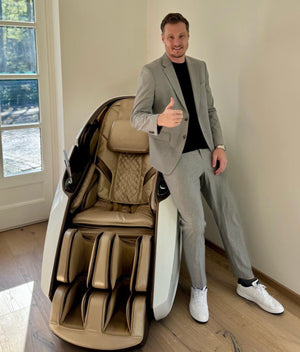
Marcell Jansen
Former German international footballer with 45 caps, participant in World Cups and European Championships, later president of Hamburger SV.
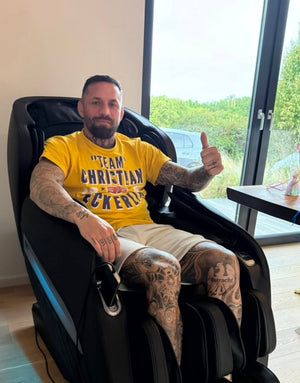
Christian Eckerlin
Former professional footballer and now one of Germany's most renowned MMA fighters. Represents discipline, perseverance, and focus.
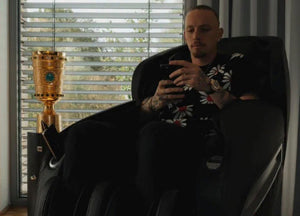
Marius Wolf
German international, under contract with FC Augsburg since 2024. Impresses with dynamism, versatility, and tireless commitment.
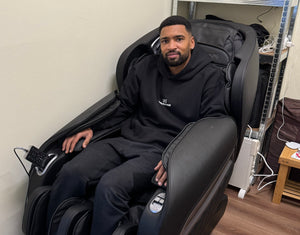
Freddy Kiwitt
Professional boxer and former WBO European Welterweight Champion, known for his technically astute fighting style.
Han Ying
German national table tennis player, multiple Olympian and winner of numerous international medals, including a silver in 2016.
Videos
-
FIBO 2026
-
Lounge Hamburg
-
A visit to the showroom
-
NIOX × NAIPO
-
Campaign film
-
Relax Lounge
-
NAIPO A350
-
NAIPO S80
-
NAIPO Model P
-
NAIPO A150
-
NAIPO 1900

- Test sitting at over 40 locations
- In-house technicians for assembly & repair
- In-house NAIPO Logistics & Kühne+Nagel
- Plus X Award 2025 "Best Brand of the Year"
- German Brand Award 2026 (Innovation, Brand Creation)
- Personalised service
- Dispatched from a warehouse near you
All ratings come from external review platforms — the links lead directly to the respective source. The authenticity of the reviews is the responsibility of the respective platform. As of: July 2026


